
 Available in US
Forty-eight flags. Twelve groups. One trophy that weighs exactly 6.175 kilograms. I have been staring at the completed team list for the 2026 FIFA World Cup since the final playoff matches settled on March 31, and the field tells a story that no previous tournament has told. Four nations are making their World Cup debut. One former champion is absent for the third consecutive edition. A country that last appeared at this stage four decades ago is back. The world cup 2026 teams represent the most diverse, unpredictable, and analytically fascinating lineup FIFA has ever assembled.
I have analyzed every qualifying campaign across all six confederations, built probability models for all 12 groups, and tracked roster developments for the nations most likely to shape the betting markets. What follows is a complete breakdown — from the three co-hosts to the debutants who nobody saw coming. If you are looking for raw odds data, I maintain a separate live odds tracker with sportsbook comparisons. This page is about the teams themselves: who they are, how they got here, and what they are capable of doing once the whistle blows at Estadio Azteca on June 11.
The 48 world cup 2026 teams break into rough tiers based on current betting odds and competitive pedigree. At the top sit the genuine title contenders — five or six nations with realistic paths to the final at MetLife Stadium. Below them, a layer of dark horses capable of deep knockout runs. Then the solid middle class of teams expected to advance from their groups but unlikely to reach the semifinals. And finally, the debutants and qualifiers whose primary goal is survival through the group stage. I have organized this guide to move through those tiers, because understanding where a team sits in the hierarchy is the first step toward understanding their odds.
The Three Hosts — Canada, USA and Mexico
When I covered the 2014 World Cup in Brazil, the host nation’s run to the semifinal felt inevitable — right up until Germany put seven past them. Hosting a World Cup creates a unique cocktail of expectation, familiarity, and public pressure that warps both performance and betting markets. In 2026, the cocktail is split three ways, and each host enters with dramatically different ambitions.
Canada is the story I am closest to, and not just geographically. This is a nation playing in its first home World Cup, only its third World Cup appearance ever, and carrying the weight of a generation that transformed Canadian soccer from an afterthought into a continental power. Alphonso Davies is the headline — his pace and athleticism off the left flank make him one of the most dangerous wide players in world football — but Jonathan David’s goal-scoring consistency at Juventus gives Canada something they lacked in Qatar 2022: a reliable finisher. Jesse Marsch’s tactical system demands high pressing and quick transitions, which suits the squad’s athletic profile but can leave them exposed against technically superior opponents who hold possession. Group B pairs Canada with Bosnia and Herzegovina, Qatar, and Switzerland. I expect Canada to finish first or second. A Round of 32 match at BC Place in Vancouver is the realistic ceiling for this squad, with a quarterfinal push possible if the knockout bracket falls kindly.
The United States enters as the most expensive host in terms of betting expectations. The USMNT has invested heavily in a European-based core — Christian Pulisic, Weston McKennie, Tyler Adams, Gio Reyna — and the 2026 tournament is the generational payoff that U.S. Soccer has been building toward for a decade. They drew Group D alongside Paraguay, Australia, and Turkey. On paper, it is the softest group any host received, and anything less than a group-stage sweep would feel like underperformance. The depth of the American squad is legitimate: they can field two distinct starting elevens of comparable quality, which matters in a 39-day tournament. Their ceiling is a semifinal appearance. Their floor, thanks to the group draw, is still the Round of 32.
Mexico approaches this World Cup differently from their co-hosts. El Tri qualified automatically as hosts, but the on-pitch trajectory has been worrying. Mexico exited at the group stage in Qatar 2022 for the first time since 1978, and their qualifying form in CONCACAF has lacked the dominance that once defined the program. Group A features South Africa, South Korea, and Czechia — a competitive but winnable draw. The opening match at Estadio Azteca on June 11 against South Africa carries enormous symbolic weight. Mexico’s home support in Mexico City will be ferocious, and I would expect them to win that opener comfortably. But advancing deep into the knockout rounds requires the kind of tactical flexibility that this aging squad has not consistently demonstrated. A Round of 32 exit is the most likely outcome based on current form.
Title Contenders — Odds and Outlook
I tracked a stat during the last three World Cups that I find useful for identifying genuine contenders versus media hype: how many players in a squad play regular minutes at clubs competing in the Champions League knockout stage? The number correlates strongly with deep tournament runs because it measures exposure to high-pressure, high-stakes football — the closest club equivalent to a World Cup knockout match. For 2026, five nations stand clearly above the rest by this metric.
Argentina enters as defending champions and tournament favourites at most sportsbooks. Lionel Messi, at 38, has confirmed his intention to play in what will almost certainly be his final World Cup. The Argentine squad extends far beyond Messi — Julián Álvarez, Enzo Fernández, Alexis Mac Allister, Lautaro Martínez, and Emiliano Martínez form a core that won both the 2022 World Cup and the 2024 Copa America. Their weakness, if you can call it that, is transition speed in defence. Argentina’s high line under Lionel Scaloni has been punished by teams with rapid counter-attacking wingers, and the knockout rounds will test that vulnerability. Group J pairs them with Algeria, Austria, and Jordan — comfortable on paper. Argentina’s odds to win the tournament currently sit in the 4.50-5.50 range depending on the sportsbook, making them the outright favourite or a close second behind France.
France has the deepest squad in the tournament by virtually any measure. Kylian Mbappé, now established as the world’s most decisive forward, leads a roster that includes Aurélien Tchouaméni, Eduardo Camavinga, William Saliba, and the emerging Mike Maignan in goal. France reached the 2022 final and won it all in 2018 — their consistency at major tournaments over the last decade is unmatched. Group I with Senegal, Norway, and Iraq presents a manageable path, though Senegal’s pace and physicality could produce a competitive group-stage match. France’s odds range from 4.50 to 6.00, and they represent the closest thing to a “safe” pick at the top of the market — though no World Cup champion is truly safe.
Brazil has not won a World Cup since 2002, which feels like a statistical anomaly for a country with five titles. The current squad under Dorival Junior features Vinicius Junior, Rodrygo, Raphinha, and an overhauled midfield that finally addresses the defensive weakness that torpedoed their 2022 campaign against Croatia. Group C pairs Brazil with Morocco, Haiti, and Scotland. Morocco will be a stern test — they reached the 2022 semifinal and their defensive organization remains elite — but Brazil should emerge as group winners. Their odds to win the tournament sit around 6.00-7.00, reflecting both their talent and the lingering uncertainty about whether this generation can close out a tournament the way the 2002 vintage did.
England has the individual talent to win the World Cup but a historical tendency to fall short in the matches that matter most. The Euro 2024 final loss to Spain extended a drought that now stretches back to 1966. Group L — Croatia, Ghana, and Panama — is the most intriguing group for English fans, because Croatia has eliminated or frustrated England at the last three major tournaments. If England top the group and avoid a difficult Round of 32 draw, the path to the semifinal is realistic. Jude Bellingham, Phil Foden, Bukayo Saka, and Declan Rice represent a peak generation of English talent. The question, as always, is whether the tournament structure and management approach allow that talent to express itself under pressure. Odds typically range from 6.50 to 8.00.
Spain rounds out my list of genuine contenders. Euro 2024 champions with the youngest squad of any tournament favourite, Spain’s strength lies in the midfield axis of Pedri, Gavi, and the extraordinary Lamine Yamal, who will be 18 during the tournament and is already one of the most technically gifted wingers in world football. Spain’s tiki-taka identity has evolved under Luis de la Fuente into something more direct and vertically aggressive, which suits a 48-team World Cup where group-stage opponents vary wildly in quality. Group H with Cabo Verde, Saudi Arabia, and Uruguay gives Spain a clear path to the knockout rounds, though Uruguay’s competitive pedigree demands respect. Spain’s odds range from 7.00 to 9.00.
Germany deserves mention on the periphery of the contender tier. The 2024 Euro hosts reached the quarterfinal of their home tournament before a narrow loss to Spain, and Jamal Musiala has emerged as one of the tournament’s most exciting attacking talents. Group E with Curaçao, Côte d’Ivoire, and Ecuador should be comfortable. But Germany’s recent tournament record — group-stage exits in 2018 and 2022 — means the market prices them at 10.00-13.00, outside the top five but not out of the picture entirely.
Dark Horses to Watch
The term “dark horse” gets thrown around carelessly before every World Cup, usually applied to whatever mid-tier European team had a decent qualifying campaign. I define it more narrowly: a dark horse is a team priced outside the top eight in the outright winner market that has a realistic path to the quarterfinal or beyond based on group composition, squad quality, and recent tournament performance. By that standard, five teams deserve attention from bettors looking for value deeper in the odds board.
Morocco’s 2022 semifinal run was not a fluke, and anyone who treats it as one has not studied Walid Regragui’s system. The Atlas Lions defend in a compact 4-1-4-1 that is exceptionally difficult to break down, and their counter-attacking transitions through Hakim Ziyech and Achraf Hakimi are devastating. Group C with Brazil, Haiti, and Scotland is tough at the top, but Morocco could realistically finish second and draw a favourable Round of 32 opponent. Their odds to win the tournament sit around 25.00-35.00, but their odds to reach the quarterfinal are far shorter and represent genuine value. For a deeper look, I have written a full Morocco team preview.
The Netherlands sits in a fascinating spot. Historically one of the most talented footballing nations, the Dutch have a group (F) that includes Japan, Sweden, and Tunisia — competitive but navigable. Their squad features Virgil van Dijk, Frenkie de Jong, Cody Gakpo, and Xavi Simons, a blend of experience and youth that mirrors successful Dutch World Cup campaigns. If they top Group F, they could avoid the major contenders until the quarterfinal. Odds around 15.00-20.00 feel slightly generous given their talent floor.
Portugal is transitioning into the post-Cristiano Ronaldo era, and the transition looks smoother than most expected. Rafael Leão, Bernardo Silva, Bruno Fernandes, and João Félix give Portugal attacking depth that rivals any team in the tournament. Group K pairs them with DR Congo, Uzbekistan, and Colombia — a group they should win comfortably. The test comes in the knockout rounds, where Portugal’s tendency toward late-game chaos (they conceded after the 85th minute in three of their last eight competitive matches) could cost them against disciplined opponents. Odds range from 12.00 to 17.00.
Japan quietly finished their Asian qualifying campaign with the best defensive record on the continent and a squad packed with players at top European clubs — Takefusa Kubo, Kaoru Mitoma, Wataru Endo, and Takehiro Tomiyasu among them. They pushed Germany to a defeat in the 2022 group stage and beat Spain in the same tournament. Group F is the challenge: the Netherlands and Sweden are strong opponents. But Japan’s ability to upset established European sides is no longer surprising — it is expected. At odds of 30.00-50.00, they are worth a small futures stake for bettors who believe the Asian confederation’s rising tide has not been fully priced into the market.
Croatia rounds out my dark horse list, though calling a three-time semifinalist a dark horse feels almost disrespectful. Luka Modrić is 40 and likely playing his final World Cup, but the supporting cast — Joško Gvardiol, Mateo Kovačić, and Mario Pašalić — is strong enough to sustain a deep run without relying entirely on Modrić’s genius. Group L with England, Ghana, and Panama will be competitive, but Croatia’s tournament pedigree is virtually unmatched among non-favourites. They were third in 2022, runners-up in 2018, and semifinalists in 1998. Odds of 25.00-35.00 reflect the market’s uncertainty about an aging squad, but I would not bet against Modrić in a World Cup knockout match without very good reason.
World Cup Debutants — Cabo Verde, Curaçao, Jordan and Uzbekistan
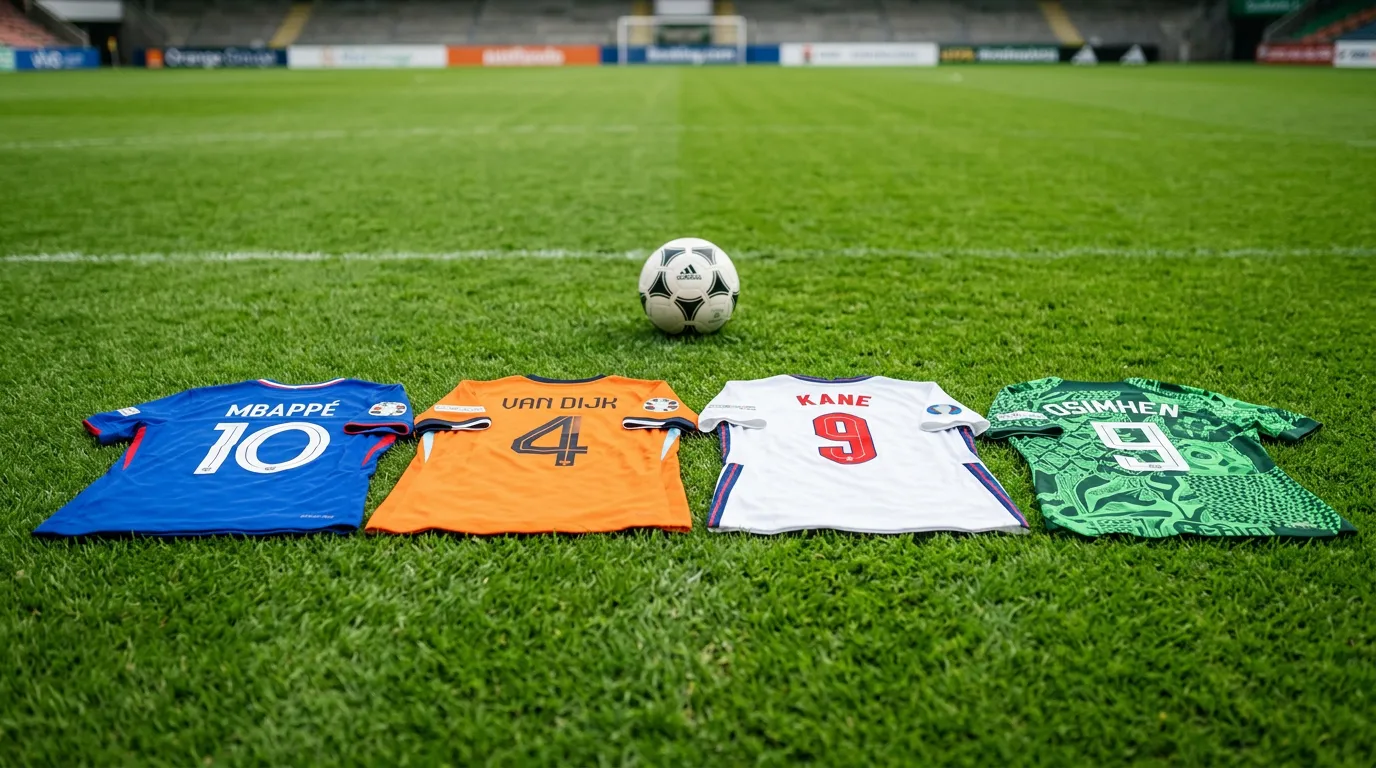
There is a moment in every debutant’s first World Cup match — I have watched it happen across multiple tournaments — where the magnitude of the occasion visibly overwhelms the players. The anthem plays, 50,000 people are screaming, and a team that fought through four years of qualifying just to get here suddenly looks like they have never played football before. It passes. But that opening 15 minutes can be brutal, and it is an exploitable window for bettors who understand the psychology of first-time World Cup participants.
Cabo Verde is the most remarkable qualifying story of the entire cycle. An island nation of roughly 600,000 people — smaller than the city of Mississauga — fought through the entire African qualifying gauntlet to earn their spot. Their squad is built on European-based professionals, with several players plying their trade in the Portuguese and Belgian leagues. Group H with Spain, Saudi Arabia, and Uruguay is a daunting draw, and Cabo Verde’s realistic ceiling is a competitive showing with one or two close results. Their defensive organization under coach Bubista has been impressive in qualifiers, conceding fewer goals per game than several traditionally stronger African nations. For bettors, Cabo Verde’s matches are interesting for the over/under market: I expect low-scoring games driven by their defensive approach, likely sitting under 2.5 goals in all three group fixtures.
Curaçao’s inclusion adds a Caribbean storyline to a tournament that badly needed one. With a population of roughly 150,000, they are the smallest nation by population at the 2026 World Cup. Their path through CONCACAF qualifying included victories over larger regional federations, and their squad features a handful of players with experience in the Dutch Eredivisie — a natural pipeline given Curaçao’s historical ties to the Netherlands. Group E with Germany, Côte d’Ivoire, and Ecuador is brutally difficult. A single point from three matches would be an achievement. But the Group E games involving Curaçao could offer value on the Asian handicap, where sportsbooks may overestimate the margin of defeat for a team that defends with discipline even against superior opposition.
Jordan represents the rising tide of Asian football and arrived through a qualifying campaign that included a run to the 2024 Asian Cup final. Their squad lacks the European club pedigree of some debutants, but their collective tactical organization under coach Hussein Ammouta has been exceptional. Group J alongside Argentina, Algeria, and Austria is challenging, though Austria and Algeria are beatable opponents on any given day. Jordan’s best chance of a result comes in their second or third group match, once the first-game nerves have dissipated and they can settle into their defensive structure. At 500.00+ to win the tournament, Jordan is not a futures play — but their individual match odds will present opportunities for bettors who respect their defensive solidity.
Uzbekistan completes the debutant quartet and brings the strongest squad of the four. Their Asian qualifying campaign finished with a goal difference that ranked among the best on the continent, and players like Eldor Shomurodov, Jaloliddin Masharipov, and Abdukodir Khusanov bring genuine quality. Group K with Portugal, DR Congo, and Colombia is difficult but not impossible — a third-place finish with four points could be enough to advance to the Round of 32 under the expanded format. Uzbekistan is the debutant most likely to cause an upset, and their opening match odds could offer value if the market treats them as a typical first-timer rather than the competitive side they have become.
Biggest Team Storylines — Italy Out, Iraq Returns
I keep a running list of World Cup narratives that I think will drive betting market behaviour, and two storylines dominate this tournament’s backdrop.
Italy’s absence is the most significant story in European football. The four-time world champions have now failed to qualify for three consecutive World Cups — 2018 (lost in the playoff to Sweden), 2022 (eliminated by North Macedonia), and 2026 (lost on penalties to Bosnia and Herzegovina in the UEFA playoff). For a nation that won the tournament as recently as 2006, this is an unprecedented collapse. The betting implications are indirect but real: Italy’s group-stage opponents benefit from not facing a traditional powerhouse, and the European qualifying pathway that produced Bosnia and Herzegovina over Italy suggests the competitive gap between mid-tier and top-tier European teams has narrowed significantly. If you are pricing European group-stage matches, Italy’s absence should recalibrate your baseline for what “underdog” means in a European context.
Iraq’s return after 40 years is the sentimental story of the tournament. They last appeared at the World Cup in 1986 in Mexico and won the 2007 Asian Cup during a period of profound national crisis. Their qualification through the intercontinental playoff — beating Bolivia 2-1 in extra time — earned them a spot in Group I with France, Senegal, and Norway. Iraq will not advance from that group, but their matches will be emotionally charged and could produce unpredictable results, particularly against Norway, where the talent gap is narrowest. For prop bettors, Iraq’s matches are worth monitoring for “first team to score” and “both teams to score” markets where underdog determination can create early-game volatility.
Beyond these two headline stories, the 2026 World Cup features the largest African contingent ever (nine teams), a full Caribbean representative in Curaçao, and the continued emergence of Asian football through Japan, South Korea, Australia, Saudi Arabia, Uzbekistan, Jordan, Qatar, Iraq, and Iran. The global balance of the tournament has shifted perceptibly. Confederations that once provided comfortable group-stage opponents for European and South American heavyweights now field teams with tactical sophistication and European club experience. This shift is already reflected in the odds, where traditional “easy” group-stage matchups are priced more tightly than they would have been a decade ago.
Full Team Odds Comparison Table

Every number in this table will shift between now and June 11, but the relative positioning tells you how the market ranks the 48 world cup 2026 teams right now. I have grouped them by tier rather than listing all 48 individually, because the tail — teams priced above 200.00 — moves so infrequently that tracking exact odds is less useful than understanding which tier a team belongs to.
| Tier | Team | Odds Range (Decimal) | Group |
|---|---|---|---|
| Title Contenders | Argentina | 4.50 – 5.50 | J |
| Title Contenders | France | 4.50 – 6.00 | I |
| Title Contenders | Brazil | 6.00 – 7.00 | C |
| Title Contenders | England | 6.50 – 8.00 | L |
| Title Contenders | Spain | 7.00 – 9.00 | H |
| Contender Fringe | Germany | 10.00 – 13.00 | E |
| Contender Fringe | Portugal | 12.00 – 17.00 | K |
| Contender Fringe | Netherlands | 15.00 – 20.00 | F |
| Dark Horses | USA | 18.00 – 25.00 | D |
| Dark Horses | Croatia | 25.00 – 35.00 | L |
| Dark Horses | Morocco | 25.00 – 35.00 | C |
| Dark Horses | Belgium | 20.00 – 30.00 | G |
| Dark Horses | Japan | 30.00 – 50.00 | F |
| Dark Horses | Uruguay | 30.00 – 45.00 | H |
| Mid-Tier | Mexico | 40.00 – 60.00 | A |
| Mid-Tier | Colombia | 40.00 – 60.00 | K |
| Mid-Tier | Canada | 50.00 – 80.00 | B |
| Mid-Tier | Senegal | 50.00 – 80.00 | I |
| Mid-Tier | South Korea | 60.00 – 100.00 | A |
| Mid-Tier | Switzerland | 50.00 – 80.00 | B |
| Long Shots | All others | 100.00+ | Various |
A few observations from the table. The gap between Argentina/France and the third-tier contenders (England, Spain) has narrowed since the group draw. England’s placement in Group L with Croatia — a team that has historically given them problems — pulled their odds slightly longer, while Spain’s favourable Group H draw compressed their price. Brazil occupies an awkward middle ground: the talent is undeniable, but three consecutive quarterfinal exits (2014, 2018, 2022) have made the market skeptical about their ability to close out a tournament.
For value hunters, the interesting zone sits between 25.00 and 50.00. Morocco, Croatia, Japan, and Uruguay all have the squad quality and tournament experience to reach a quarterfinal, and at those prices, a small futures bet offers a 24x to 49x return if they go on a run. I would not back any of them to win it all, but “to reach the semifinal” or “to reach the quarterfinal” markets for these teams tend to offer sharper value than the outright winner market.
How Every Team Qualified
Qualification paths matter more than most bettors realize. A team that cruised through a weak qualifying group arrives with confidence but without the battle-hardening that comes from tight matches. A team that survived a brutal playoff brings mental toughness but may carry physical and psychological scars. I pay close attention to how nations reached the World Cup because it tells me something the odds do not always capture: how this team handles pressure.
The three co-hosts — Canada, the United States, and Mexico — qualified automatically. That removes the data point of recent competitive fixtures, which is a problem for model-based bettors. Canada’s most recent competitive results come from the 2024 Copa America (invited participant) and CONCACAF Nations League matches, which provide some signal but nothing equivalent to a qualifying campaign. The hosts will enter the tournament with fewer competitive miles on their legs than anyone else, which is both an advantage (freshness) and a disadvantage (rust).
The European qualifying pathway produced the most dramatic results. Bosnia and Herzegovina’s penalty shootout victory over Italy in the UEFA playoff was the headline, but Sweden’s 3-2 win over Poland, Czechia’s penalty triumph over Denmark, and Turkey’s narrow 1-0 defeat of Kosovo all came through the playoff path, meaning these four European teams arrived through the most stressful possible route. That experience could be an asset in the group stage, where every match carries elimination-level intensity.
South America sent six automatic qualifiers — Argentina, Brazil, Uruguay, Colombia, Ecuador, and Paraguay — from a single round-robin qualifying table. The 18-match CONMEBOL qualifying campaign is the most physically demanding pathway in world football, featuring matches at altitude in La Paz, in tropical heat in Barranquilla, and in freezing conditions in Buenos Aires. Every South American team at the 2026 World Cup has been tested in ways that European qualifiers, who played in more controlled environments, have not.
Africa’s nine representatives came through a two-phase qualifying process that included both group stages and a final round. Morocco, Senegal, Côte d’Ivoire, Egypt, South Africa, Ghana, Algeria, Tunisia, and DR Congo all survived a process that eliminated traditional continental powers. Nigeria’s absence is notable — they failed to advance past the group stage of African qualifying, marking a significant decline for one of the continent’s most decorated programs.
Asia contributed eight teams — its largest ever World Cup contingent — through a qualifying system that included four rounds of matches spread over two years. Japan, South Korea, Australia, Saudi Arabia, Iran, Qatar, Uzbekistan, Jordan, and Iraq all qualified, with Uzbekistan, Jordan, and Iraq earning spots through the later rounds and intercontinental playoffs. The Asian confederation’s depth has improved measurably since 2022, and the days of treating Asian group-stage opponents as comfortable wins are over.
CONCACAF sent four teams beyond the three hosts: Panama qualified directly, while Jamaica reached the intercontinental playoff before losing to DR Congo. The Caribbean and Central American region’s World Cup representation is thin, but Curaçao’s emergence adds a new dimension. Oceania’s sole representative is New Zealand, who qualified through the intercontinental pathway and will face Belgium, Egypt, and Iran in Group G — a group where survival is the only realistic objective.
Who Wins It All?
I have spent nine years resisting the urge to make firm predictions in overview pieces like this, and I am not about to start now. But I will tell you where my model points. Argentina and France are separated by less than a percentage point in my probability estimates for lifting the trophy — call it 16% each. Brazil sits at 12%, England at 9%, Spain at 8%. Everyone else is single digits. The combined probability of a team outside the top five winning the tournament is roughly 27%, which is higher than most people realize and reflects the chaos that a 48-team, 104-match format can produce.
The world cup 2026 teams tell a story of global football becoming flatter, more competitive, and harder to predict. That is good for the sport and excellent for bettors willing to do the work. I will be breaking down every group in detail across this site, along with individual team previews for the 18 nations most likely to shape the betting markets. The field is set. The odds are posted. Now we wait for June 11.
