
 Available in US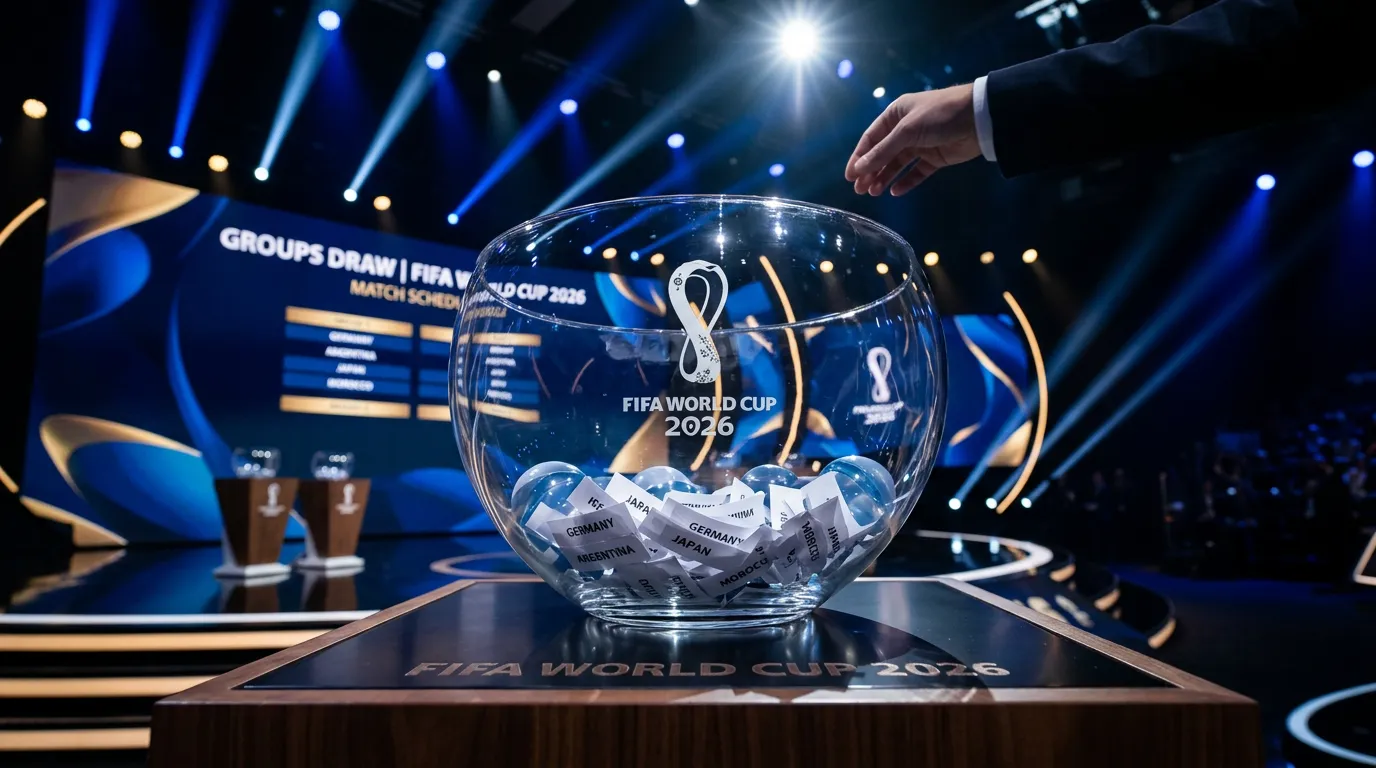
The draw is done, the groups are locked, and I have spent the last 72 hours running every permutation through my model. Twelve groups of four — the first time the World Cup has expanded beyond eight groups — and the competitive spread across them is wildly uneven. Some groups have a clear favourite and three sides fighting for scraps. Others are genuine four-way battles where any finishing order feels plausible. Understanding the world cup 2026 groups is not just about knowing which teams are in which group. It is about reading the structure behind the matchups, identifying where the betting value sits, and anticipating the third-place scenarios that will define who advances to the Round of 32.
What follows is a complete breakdown of all 12 groups with odds, predictions, and the betting angles I am targeting for each one. If you want a primer on the expanded format and how third-place advancement works, I covered that in detail in the betting guide. Here, I am assuming you understand the basics and want the analysis.
The 48 teams are divided into 12 groups of four. Each team plays three group-stage matches. The top two from each group advance automatically to the Round of 32, along with the eight best third-place finishers from all 12 groups. Group-stage matches are played from June 11 to June 28, with all third matchday games in each group kicking off simultaneously. The draw seeded all three co-hosts into separate groups — Mexico in Group A, Canada in Group B, the United States in Group D — and placed the remaining first seeds based on FIFA ranking.
All 12 Groups at a Glance
I stared at the draw results for about ten seconds before grabbing a notebook and circling three groups that immediately jumped out as mispriced by early betting lines. The full picture took longer to develop, but first impressions matter in betting markets because sportsbooks post opening odds within hours of the draw and those early lines often reflect gut reactions rather than deep analysis. Here is every group with my initial read.
Group A: Mexico, South Africa, South Korea, Czechia. Mexico opens the tournament at Estadio Azteca and should benefit from home crowd energy, but this group is tighter than it looks. South Korea’s pace and tactical discipline under a revamped coaching setup make them dangerous, and Czechia’s penalty shootout win over Denmark in the UEFA playoff proved their mental resilience. South Africa is the wildcard — their domestic league does not produce the same European club exposure as other African nations, but their collective spirit can carry them through individual matches. I expect Mexico and South Korea to advance, with Czechia a strong contender for the best third-place spot.
Group B: Canada, Bosnia and Herzegovina, Qatar, Switzerland. This is Canada’s home group, and every match carries enormous weight for the host nation. I covered this group extensively in the Canada team preview. Switzerland is the most complete team in the group — tactically versatile, tournament-tested, and difficult to break down. Bosnia and Herzegovina arrive on a wave of confidence after eliminating Italy in the UEFA playoff. Qatar, the 2022 hosts, have a squad that peaked two years ago and has declined since. Canada and Switzerland are my picks to advance, with Canada finishing first on home advantage.
Group C: Brazil, Morocco, Haiti, Scotland. Brazil and Morocco are both teams capable of reaching the semifinals, which makes Group C one of the most top-heavy in the draw. Haiti, the only Caribbean nation at the tournament, will struggle to compete at this level. Scotland’s return to the World Cup after missing 2022 qualifying gives them a chance to build on their Euro 2024 experience, but finishing above either Brazil or Morocco would require an upset of significant proportions. The Brazil-Morocco match is the most compelling group-stage fixture in the entire tournament — a rematch of two semifinalists from the last cycle would be a quarterfinal-quality game in round one.
Group D: USA, Paraguay, Australia, Turkey. The softest group in the draw, by my model’s estimation. The United States received the most favourable possible combination of opponents. Paraguay and Australia are competitive but limited squads, and Turkey, while talented, arrived through a difficult playoff that may have drained them. The USA should top this group comfortably. The battle for second will be between Australia and Turkey, with Paraguay likely finishing fourth. This is the group where I expect the highest average goal total per match, because all four teams prefer to play on the front foot.
Group E: Germany, Curaçao, Côte d’Ivoire, Ecuador. Germany should dominate, but the second-place race is fascinating. Côte d’Ivoire won the 2024 Africa Cup of Nations on home soil and have a squad featuring Sébastien Haller, Franck Kessié, and Nicolas Pépé. Ecuador have been consistent World Cup participants since 2002 and bring a physical, altitude-hardened style that causes problems for European sides. Curaçao will be competitive in spirit but overmatched in quality. Germany and Côte d’Ivoire are my picks, with Ecuador a live third-place contender.
Group F: Netherlands, Japan, Sweden, Tunisia. This is the most evenly matched group in the tournament. The Netherlands are top seeds but Japan have beaten them in recent friendlies and possess the squad depth to sustain a full group-stage campaign. Sweden’s playoff win over Poland showed their fighting quality, and Tunisia have been consistent at recent World Cups — unbeaten in the 2022 group stage with a famous victory over France. I would not be surprised by any finishing order in this group. For bettors, Group F is the prime target for draw-heavy markets. Three or four draws across the six matches is a realistic outcome.
Group G: Belgium, Egypt, Iran, New Zealand. Belgium’s golden generation is in its twilight — Kevin De Bruyne, Romelu Lukaku, and Thibaut Courtois are all 30+ — but the talent remains formidable. Egypt’s Mohamed Salah gives them a single-player advantage that few teams can match, and Iran’s defensive organization makes them a tough knockout opponent even for stronger sides. New Zealand will struggle to compete. Belgium and Egypt should advance, though Iran could complicate things with a low-scoring upset in the Belgium match.
Group H: Spain, Cabo Verde, Saudi Arabia, Uruguay. Spain are heavy favourites, but Uruguay’s presence makes this group more interesting than the seeding suggests. Uruguay reached the Copa America semifinal in 2024 and have a blend of experienced tournament performers (José Giménez, Federico Valverde) and emerging talent. Saudi Arabia’s famous upset of Argentina in 2022 is a reminder that they can produce individual match results against anyone, even if consistency over three games is lacking. Cabo Verde will find the quality gap considerable. Spain first, Uruguay second.
Group I: France, Senegal, Norway, Iraq. France should stroll through this group, but Senegal are capable of making the opener competitive. Sadio Mané’s presence gives Senegal a focal point in attack, and their midfield has improved significantly since 2022. Norway — featuring Erling Haaland — are the obvious second-place pick, though their collective play has not matched Haaland’s individual brilliance at club level. Iraq’s return after 40 years is a feel-good story, but the quality gap against France and Norway is steep. France and Norway advance, with Senegal the strongest third-place contender.
Group J: Argentina, Algeria, Austria, Jordan. Argentina are comfortably the best team in this group and should win all three matches. The battle for second is between Algeria and Austria, and I lean toward Austria based on their European qualifying form and stronger European club representation. Algeria’s squad has depth but inconsistency — their 2022 AFCON title defence ended in disappointment, and the coaching situation has been unstable. Jordan, as debutants, will aim for respectability rather than advancement. Argentina and Austria is my predicted finishing order.
Group K: Portugal, DR Congo, Uzbekistan, Colombia. Portugal are favourites, but Colombia make this a competitive group at the top. James Rodríguez and Luis Díaz give Colombia creativity and pace in attack, and their recent Copa America form was encouraging. DR Congo qualified through the intercontinental playoff with a hard-fought win over Jamaica, bringing defensive resilience and raw athleticism. Uzbekistan, as debutants, are better than their odds suggest — their Asian qualifying campaign was the strongest of any debutant nation. Portugal and Colombia advance, but Uzbekistan could pull a result against DR Congo that makes the third-place math interesting.
Group L: England, Croatia, Ghana, Panama. This is the group that will generate the most media attention outside of the host groups. England and Croatia have a recent World Cup rivalry — Croatia eliminated England in the 2018 semifinal, England beat Croatia in the 2022 group stage — and their matchup could determine who tops the group. Ghana add unpredictability with a squad that blends European club experience and raw pace. Panama are return participants after their debut in 2018 but are the weakest team in the group. England and Croatia are my picks, with the group winner depending on their head-to-head result.
Group of Death — Which Group Is the Toughest?
Every World Cup produces a “group of death” debate, and most of the time the answer is obvious. Not this year. The expanded format diluted the concentration of elite teams within individual groups — with 12 groups and only six or seven genuine title contenders, no single group contains more than one top-tier favourite. That changes what “group of death” means for 2026.
By my model, Group F (Netherlands, Japan, Sweden, Tunisia) is the toughest group based on the smallest points gap between the first-place and fourth-place teams. The model projects the Netherlands at 6.2 expected points, Japan at 5.1, Sweden at 4.3, and Tunisia at 3.4. That is a spread of just 2.8 points from top to bottom — the tightest of any group. In a more traditional group, where the top seed sits at 7+ expected points and the bottom seed at 2 or less, the hierarchy is clear. Group F has no clear hierarchy, and that makes it the most dangerous group for favourites and the most profitable group for bettors who target draws and upsets.
Group L (England, Croatia, Ghana, Panama) is the runner-up. England and Croatia are both capable of reaching the quarterfinals, and putting them together means one of them could exit in the Round of 32 as a group runner-up facing a tougher knockout draw. Ghana’s pace and physicality add a layer of chaos. The England-Croatia match is the highest-stakes group-stage fixture in the entire tournament, and the loser may not recover.
Group C (Brazil, Morocco, Haiti, Scotland) deserves mention because of the quality at the top. Brazil and Morocco are both semifinal-calibre teams, and their head-to-head match will be treated as a knockout game in everything but name. The loser faces a significantly harder knockout path as a potential group runner-up, and a loss could end the tournament ambitions of a team that entered as a contender.
For betting purposes, the group of death label matters because it signals where the market is most likely to misprice outcomes. In tight groups like F and L, sportsbooks tend to undervalue draws — which historically occur in roughly 25% of World Cup group matches but spike to 30%+ in competitive groups where teams play cautiously. If you are building a group-stage betting strategy, Group F draws are the first place I would look.
Host Nation Groups — Canada in B, USA in D, Mexico in A
Hosting a World Cup match and hosting a World Cup group are different things entirely. I was at the Maracana for a 2014 group match where the atmosphere was electric — and Brazil was not even playing. The host-city energy bleeds into every game played at that venue, regardless of who is on the pitch. In 2026, with matches spread across 16 stadiums in three countries, the host advantage is more fragmented than any previous tournament.
Canada’s Group B is the one I am watching most closely, for obvious reasons. The opening match — Canada versus Bosnia and Herzegovina on June 12 at BMO Field in Toronto — is the single most important sporting event in modern Canadian soccer history. BMO Field’s 30,000 capacity is intimate by World Cup standards, and the crowd will be deafening. Bosnia arrive having just beaten Italy in a penalty shootout, so they are riding high on confidence, but playing in front of a hostile Toronto crowd is a different kind of pressure than a neutral-site playoff. Canada’s second and third matches move to BC Place in Vancouver (versus Qatar on June 18 and Switzerland on June 24), giving the host nation a coast-to-coast home experience. I project Canada to take 7 points from the group — a win over Bosnia, a win over Qatar, and a draw against Switzerland — which should be enough for first place.
The USA’s Group D is the least competitive of the three host groups. Paraguay, Australia, and Turkey are all beatable opponents, and the American squad’s depth gives them a rotation advantage over 39 days. The concern for American bettors is complacency: the USMNT has historically underperformed against opponents they are expected to dominate, and a sloppy opening result could create unnecessary pressure. But the safety net of third-place advancement makes a group-stage exit nearly impossible for the USA. I project 9 points — three wins — which would give them the top-seed knockout draw they want.
Mexico’s Group A is the most competitive host group. South Korea’s tactical sophistication and Czechia’s playoff resilience make this a group where Mexico cannot afford a slow start. The Estadio Azteca opener against South Africa on June 11 is the tournament’s first match and will set the tone for Mexico’s entire campaign. I project Mexico to take 6 points — wins over South Africa and Czechia, a loss or draw against South Korea — and finish second in the group behind South Korea, whose pace and transition play suit them better against European opposition.
How Teams Qualified — Playoffs and Surprises
The qualification stories behind the world cup 2026 groups tell you things the odds cannot. Teams that fought through playoffs arrive with battle scars and adrenaline. Teams that qualified comfortably arrive rested but potentially complacent. I have found that playoff qualifiers tend to outperform their odds in the first group match — the momentum carries forward — but underperform in the third match when fatigue from the extended qualifying campaign catches up.
The four UEFA playoff winners — Bosnia and Herzegovina, Sweden, Turkey, and Czechia — all came through single-leg elimination matches decided by the thinnest margins. Bosnia’s penalty victory over Italy was the headline, but Turkey’s 1-0 win over Kosovo and Czechia’s penalty shootout against Denmark were equally tense. Sweden’s 3-2 victory over Poland was the most open of the four, a match that swung back and forth and could have gone either way. These four teams enter the World Cup having experienced the closest thing to knockout-round pressure that qualifying can produce. In my model, I give UEFA playoff winners a small positive adjustment in their first group match and a small negative adjustment in their third.
The intercontinental playoff produced two results that shaped Groups K and I. DR Congo beat Jamaica 1-0 in extra time to claim a spot in Group K alongside Portugal, Uzbekistan, and Colombia. Iraq defeated Bolivia 2-1 in extra time to join France, Senegal, and Norway in Group I. Both teams played 120 minutes of football in their final qualifying match, just two months before the World Cup. That physical toll is real, and I account for it when projecting their group-stage performance.
Among the automatic qualifiers, two campaigns stand out for their dominance. Argentina topped the South American qualifying table with 39 points from 18 matches — the highest total in CONMEBOL history for an 18-match cycle. Japan topped the Asian qualifying table with a defensive record of just three goals conceded in ten matches during the final round. Both of those numbers signal squads that are not just qualified but operating at peak competitive level heading into the tournament.
The most surprising absentees tell a story too. Italy’s failure (third consecutive missed World Cup), Nigeria’s failure (eliminated in the African group stage), and Chile’s failure (finished seventh in CONMEBOL qualifying) all point to a global levelling. The gap between traditional powers and emerging nations has compressed to the point where qualification is no longer guaranteed for anyone. That compression extends into the group stage, where the odds on supposed “easy” matchups should be scrutinized with more care than usual. A team that eliminated Italy does not become harmless just because they drew Canada instead of France.
Group Stage Betting — Best Odds and Value Picks

I keep a document called “Group Stage Edges” that I start building the day after the draw. By the time the tournament kicks off, it usually contains 25-30 specific betting angles ranked by conviction level. I am not going to publish the full list here — some of those edges only work if the market has not adjusted to them — but I will share the structural patterns that I believe will generate the most value across the world cup 2026 groups.
Draws in competitive groups are systematically underpriced. This is not a 2026-specific observation — it has held true across every World Cup I have analyzed. In groups where the points gap between first and fourth is less than 3.5 (Groups F, L, and C by my projections), draws occur in roughly 35% of matches versus the 25% base rate. Sportsbooks price draws based on overall tournament averages, not group-specific competitiveness, which creates a persistent edge. If you are betting on Group F matches, the draw should be your default starting point rather than an afterthought.
Group winner markets offer cleaner value than individual match betting because they aggregate multiple outcomes. Picking Japan to win Group F at, say, 4.50 is a bet on three matches, not one. If Japan beats Tunisia, draws with Sweden, and beats the Netherlands — a plausible sequence given recent results — that single wager pays better than betting the three match moneylines individually because the group winner market does not compound vig the way three separate bets do. I target group winner markets in groups where I disagree with the market’s first-place favourite, and for 2026, my strongest group winner disagreement is in Group A, where I rate South Korea higher than most sportsbooks do.
The “to qualify from group” market — available at most Ontario-licensed sportsbooks — lets you bet on whether a specific team finishes in the top two (or top three, with the third-place rule). This market is particularly interesting for dark horses in tough groups. Morocco to qualify from Group C, for example, might be priced at 1.70 (implied 59% probability), but my model gives them a 68% chance based on their defensive solidity and the likelihood that they beat both Haiti and Scotland even if they lose to Brazil. That 9-percentage-point gap is a meaningful edge over a sample size of one group.
Avoid “group of death” narratives when placing bets. The media labels a group as the “group of death,” which drives public money toward upsets and unders in that group. Sportsbooks know this and adjust their lines accordingly, often removing the value that the narrative supposedly created. By the time you see a “Group F is the group of death” headline, the odds have already shifted. The value in group of death scenarios sits in the opposite direction — overs and favourites that the public has abandoned because the narrative tells them to expect chaos.
Matchday three offers the most exploitable lines of the entire group stage. By the third round of matches, teams have known qualification statuses, injury information is current, and motivation levels vary wildly within the same group. A team that is already through might rest five or six starters — a decision that changes the match fundamentally but is not fully reflected in odds that were posted 48 hours earlier. I wait until squad announcements for matchday three games and then compare the announced lineup against the pre-lineup odds. If there is a significant discrepancy — a favourite resting key players but still priced as if they are at full strength — that is a high-conviction betting spot.
Who Advances? Third-Place Permutations Explained
If you bet on World Cup group stages without understanding the third-place rule, you are flying blind. The 2026 format sends the top two teams from each group to the Round of 32 automatically — that part is straightforward. The complexity comes from the eight best third-place finishers who also advance. Eight out of twelve third-place teams go through, meaning a third-place finish is far from a death sentence. In fact, it is more likely to produce advancement than elimination.
The ranking of third-place teams uses a standard tiebreaker sequence: points first, then goal difference, then goals scored. If those are level, head-to-head results within the group and finally FIFA ranking determine who advances. Based on historical data from the European Championship (which has used the best third-place system since 1986 with 24 teams), the typical cutoff for advancement sits at four points. A third-place team with four points has advanced in approximately 85% of historical cases. At three points, the advancement rate drops to about 45%, and at two points, it falls below 15%.
For the 2026 world cup 2026 groups, this creates a strategic calculation that affects how teams approach their final group match. Consider a team sitting on three points after two matches — one win, one loss. They are likely in third place with one game remaining. In a 32-team World Cup, that team needs to win their final match to have any realistic chance of advancing. In a 48-team World Cup, they might only need a draw. A single point would bring them to four points, which is historically above the third-place cutoff. That incentive toward caution in the final group match will produce lower-scoring games and more draws on matchday three — a pattern that bettors should anticipate and exploit.
My model projects the eight advancing third-place teams will come from the following groups, in rough order of likelihood: Groups A, E, I, G, F, C, K, and D. The common thread is that these groups contain one dominant team (creating a clear first-place finisher) and three relatively even teams, which means the second and third-place finishers will accumulate more points than in groups with a steep quality drop-off. Groups B, H, J, and L are less likely to produce advancing third-place teams because the quality gap between the top two and the bottom two is wider, meaning the third-place finisher will typically end with fewer points.
One scenario that my simulations flagged as particularly likely: two third-place teams from different groups finishing on identical records (same points, same goal difference, same goals scored). When that happens, FIFA ranking becomes the tiebreaker, which is essentially predetermined. This matters for bettors considering “to qualify from group” markets — if your team is fighting for a third-place advancement spot, their FIFA ranking relative to other potential third-place teams is an additional variable that most casual bettors overlook. A team ranked 25th in the FIFA standings has a built-in tiebreaker advantage over a team ranked 40th, even if their group-stage results are identical.
Group Stage Schedule and Key Dates
The group stage runs from June 11 to June 28, covering 18 calendar days with 48 matches — roughly 2.7 matches per day on average. The schedule is front-loaded, with the first two matchdays packing games into tight windows, while matchday three spaces them out so that all matches in a single group kick off simultaneously (a FIFA requirement to prevent collusion through known results).
For Canadian bettors, the time zone spread matters. Matches at Estadio Azteca in Mexico City kick off at 12:00 PM or 3:00 PM ET, which translates to 9:00 AM or 12:00 PM PT for Vancouver-based bettors. Late-evening matches at US East Coast venues (MetLife, Hard Rock, Lincoln Financial Field) start at 9:00 PM or 10:00 PM ET — 6:00 PM or 7:00 PM PT. If you are placing live bets, the time zone difference between Toronto and Vancouver means you could be reacting to a match result at 1:00 AM ET while the next game you want to bet on is still three hours away. Planning your schedule around the matches that matter most to your betting strategy is more important at this World Cup than any previous edition.
Key dates to mark on your calendar: June 11 is the opening match — Mexico versus South Africa at Estadio Azteca. June 12 brings Canada’s opening match against Bosnia and Herzegovina at BMO Field in Toronto, with a 3:00 PM ET kickoff. June 28 is the final day of group-stage action, when the last eight groups complete their matchday three fixtures. The Round of 32 begins on June 29, and the knockout stage runs through to the final at MetLife Stadium on July 19.
Canada’s three group matches are staggered across the country: the opener in Toronto on June 12, followed by matches in Vancouver on June 18 (versus Qatar, 6:00 PM ET / 3:00 PM PT) and June 24 (versus Switzerland, 3:00 PM ET / 12:00 PM PT). That schedule gives the Canadian squad a cross-country travel day between Toronto and Vancouver but avoids back-to-back matches with fewer than four rest days — a significant advantage in a tournament where fatigue accumulates quickly.
For bettors targeting specific matchdays, I recommend treating the group stage as three distinct phases. Matchday one (June 11-16) is about openers, nerves, and the market adjusting to real tournament data. Matchday two (June 17-22) is where form begins to crystallize and the value shifts toward teams that lost their opener and need a result. Matchday three (June 23-28) is the strategic phase, where known standings and motivation levels create the widest gap between true probability and posted odds. My heaviest betting volume in previous World Cups has always fallen on matchday three, and I expect 2026 to be no different.
Group Stage Verdict
The world cup 2026 groups present the most complex group-stage puzzle in World Cup history. Twelve groups instead of eight. A third-place advancement rule that changes how teams approach matchday three. Host nations spread across three countries. And a field of 48 teams that includes four debutants, nine African nations, and a level of global competitive balance that no previous tournament has matched.
My model projects 14 draws across the 48 group-stage matches — a 29% draw rate, above the historical World Cup average of 25%. It projects an average of 2.58 goals per group-stage match, slightly below the 2022 average of 2.69, driven by the cautious approach that the third-place rule incentivizes. And it projects at least two genuine upsets — defined as a team winning at odds of 5.00 or longer — across each matchday.
The groups are set. The 48 teams are preparing. And the betting lines are live. I will be updating group-specific analysis across KickOdds 26 as the tournament approaches, with individual group breakdowns, matchday previews, and live odds tracking from opening whistle to final group result. The edges are there. You just have to know where to look.
