
 Available in US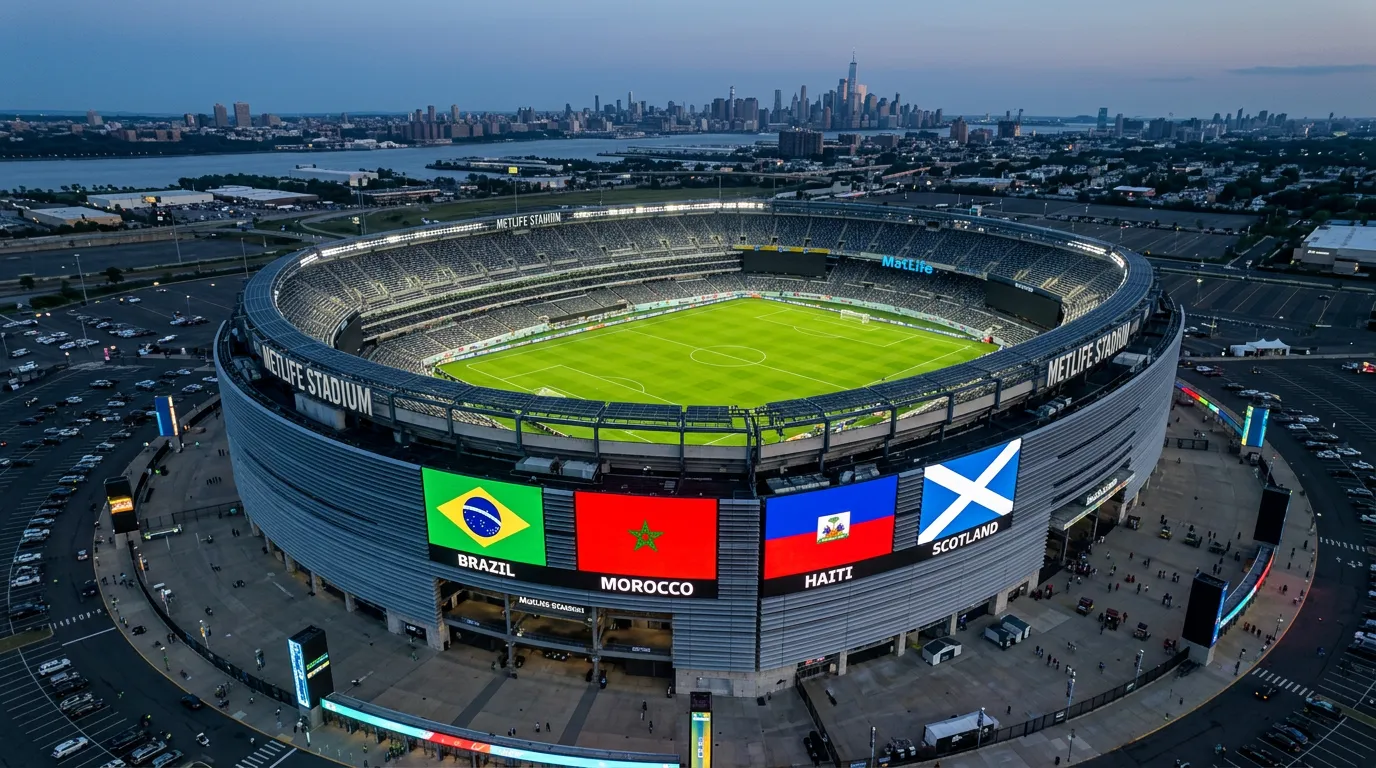
What happens when you put two semifinal-calibre teams in the same group and add a nation making its World Cup debut alongside another returning after 28 years? You get Group C — and what I believe is the most lopsided pool in the entire 2026 World Cup draw. Brazil and Morocco are separated from Haiti and Scotland by a chasm of tournament experience, squad depth, and market expectation that makes this group less a competitive balance exercise and more a race between two heavyweights for pole position.
But here is why I am still fascinated by Group C as a betting analyst: lopsided groups produce the most reliable outcomes, which makes them ideal for confident wagers with clear edges. When the talent disparity is this wide, the value is not in predicting who advances — it is in predicting margins, goal totals, and the exact finishing order that determines Round of 32 matchups. I have spent a decade identifying those precise edges, and Group C offers several that I will break down in detail.
Group C Teams at a Glance
During my first year as a professional analyst, a veteran told me that every World Cup group has a story. Group C’s story in 2026 is about contrasts: the five-time champions against a Caribbean island of 11 million people playing their first ever World Cup match, and Africa’s best against a Scottish side that last appeared at a World Cup when I was in elementary school. Let me profile each team.
Brazil enters the 2026 World Cup desperate to end a 24-year title drought — the longest in their history. The last Brazilian team to lift the trophy did so in 2002 in Yokohama, and every squad since has carried that growing weight of expectation. Manager Carlo Ancelotti, appointed in 2024 as Brazil’s first permanent foreign coach, has stabilized a program that was in crisis after a quarterfinal exit at the 2022 World Cup and a disastrous Copa America 2024. The current squad is headlined by Vinicius Junior, Rodrygo, and Endrick at the sharp end, with Marquinhos and a rejuvenated defensive setup behind them. Brazil qualified through CONMEBOL with their usual blend of brilliance and inconsistency, finishing third in the qualification table behind Argentina and Colombia. Ancelotti’s tactical approach differs from previous Brazil managers — he favours a structured 4-3-3 with disciplined pressing rather than the freewheeling attack-first philosophy that defined earlier eras. That pragmatism could be the difference in a tournament format where seven matches are required to reach the final.
Morocco’s semifinal run at the 2022 World Cup was the defining underdog story of the last decade. The Atlas Lions beat Belgium, Spain, and Portugal on their way to the final four, and their squad has only improved since. Achraf Hakimi remains one of the best right-backs in world football, Sofiane Amrabat provides midfield steel, and the defensive system under Walid Regragui is the most disciplined in African football. Morocco qualified through CAF with relative ease, losing just once in fourteen matches, and they arrive in 2026 as legitimate dark horse contenders — not the unknown quantity they were four years ago. For Canadian bettors, Morocco’s large diaspora community in Montreal and other Canadian cities means this team will have significant crowd support at North American venues. That is a tangible advantage in a tournament where neutral-venue atmospheres can swing depending on which fanbase shows up in greater numbers.
Haiti is the feel-good story of the 2026 World Cup. The Caribbean nation qualified through CONCACAF for the first time in their history, becoming the smallest nation by GDP in the tournament and one of four debutants alongside Cape Verde, Curaçao, and Jordan. Haiti’s squad is built around players from MLS, the French lower leagues, and the domestic Haitian league, with no player competing at a club above the second tier of a major European league. That talent gap will be evident on the pitch, but Haiti’s qualification run showed remarkable collective spirit and tactical discipline under head coach. Their matches against Brazil and Morocco are expected to be heavily one-sided, but the Scotland fixture on June 13 at Gillette Stadium in Foxborough could be competitive. Haiti’s primary goal is to avoid being eliminated without a single point or goal — a fate that befell several debutants at expanded tournaments.
Scotland returns to the World Cup for the first time since France 1998. That 28-year absence is the longest of any current European qualifier, and the emotional significance for Scottish football is immense. The squad under Steve Clarke features strong Premier League representation — John McGinn, Scott McTominay, Andrew Robertson, and Billy Gilmour provide a spine that would be competitive in most groups. Scotland’s challenge in Group C is clear: they must navigate past either Brazil or Morocco to advance, and their head-to-head against Morocco on June 19 at Gillette Stadium is effectively a must-win if they harbour any ambitions of reaching the Round of 32. Scotland’s qualification campaign showed their strengths — organized defence, effective set pieces, and a willingness to fight for every ball — but also their limitations in attacking creativity against deep-sitting opponents.
Group C Schedule & Kick-Off Times
I have watched enough World Cups to know that schedule placement matters as much as squad quality. Early kickoffs in unfamiliar time zones catch teams cold. Late matches under floodlights produce different energy. Group C’s schedule is spread across the eastern seaboard of the United States, with all matches played in the Eastern Time zone — a significant logistical advantage for Canadian viewers.
Matchday 1 on June 13 features Brazil versus Morocco at MetLife Stadium in East Rutherford at 6:00 PM ET (3:00 PM PT), followed by Haiti versus Scotland at Gillette Stadium in Foxborough at 9:00 PM ET (6:00 PM PT). Matchday 2 on June 19 brings Scotland versus Morocco at Gillette Stadium at 6:00 PM ET and Brazil versus Haiti at Lincoln Financial Field in Philadelphia at 9:00 PM ET. The final matchday on June 24 has simultaneous kickoffs: Scotland versus Brazil at Hard Rock Stadium in Miami Gardens and Morocco versus Haiti at Mercedes-Benz Stadium in Atlanta, both at 6:00 PM ET (3:00 PM PT).
The standout scheduling detail is Brazil versus Morocco on the opening day. That match — effectively a potential group final played on Matchday 1 — creates massive early-tournament betting interest and could determine the group winner before the other four matches are even played. A Brazil victory would make them overwhelming favourites to finish first, while a Morocco win would flip the group dynamic entirely. I expect this to be the most-watched group-stage match of the entire tournament, and the odds market reflects that anticipation with a heavily traded line.
Group C Betting Odds
Spend five minutes in any sportsbook app and the Group C market tells a blunt story. Brazil to win the group sits at approximately 1.65 to 1.80 in decimal odds. Morocco is priced around 2.50 to 3.00. Scotland ranges from 8.00 to 12.00, and Haiti is priced at 25.00 or higher — essentially a novelty market reflecting the near-zero probability of a debutant topping a group containing Brazil.
The qualification market is where sharper bettors look. Brazil to qualify sits around 1.07 — the shortest-priced qualification favourite in the entire tournament. Morocco to qualify is approximately 1.25, reflecting the market’s confidence that both heavyweights will advance. Scotland at 3.50 to 4.00 represents the value play, though I would note that Scotland’s path to qualification essentially requires beating Haiti convincingly and taking at least a point off Morocco or Brazil. Haiti’s qualification is priced above 15.00, and I cannot find a scenario model that puts their advancement probability above 3%.
Match-level odds for Brazil versus Morocco on Matchday 1 reflect a genuine contest: Brazil at approximately 1.85, the draw at 3.40, and Morocco at 4.50. That is a much tighter spread than most people would expect for a Brazil group-stage match, and it speaks to Morocco’s transformation from plucky underdog to established threat. I see value in the draw at 3.40 — Morocco’s defensive system is specifically designed to neutralize technically superior opponents, and Brazil under Ancelotti are more patient in possession than previous iterations, which means fewer high-risk moments for Morocco to exploit but also fewer easy Brazilian goals. My model projects a 28% draw probability, which means 3.40 represents a slight edge.
Total goals markets across the group follow a predictable pattern. Brazil and Morocco’s matches against Haiti will carry high over/under lines (3.5 or higher), while the Brazil-Morocco and Scotland-Morocco fixtures will sit around 2.0 to 2.5. Scotland versus Haiti is the most uncertain line, with most books setting it at 2.5 goals — I lean over, as both teams will see that match as their best chance for a result and will commit more attacking resources than in their other two fixtures.
Group C Prediction — Who Advances?
I called Morocco’s 2022 semifinal run before the tournament started, and I lost money on it because I did not trust my own analysis enough to back the bet properly. I will not make that mistake again. My Group C prediction: Brazil finishes first with seven points, Morocco finishes second with seven points (separated by goal difference after drawing their head-to-head), Scotland finishes third with three points, and Haiti finishes fourth with zero points.
The scenario that scares Brazil supporters is a Morocco victory on Matchday 1. If Morocco beats Brazil on June 13, they take control of the group and likely never relinquish it — their remaining matches against Scotland and Haiti are both winnable, and a nine-point Morocco campaign with a head-to-head victory over Brazil would crown them group winners regardless of Brazil’s results. I assign a 20% probability to a Morocco win on the opening day, which is lower than the market implies at 4.50 — suggesting Brazil’s odds are slightly generous and worth backing at 1.85.
Scotland’s path to the Round of 32 runs through the best-third-place door. Three points from a victory over Haiti, combined with narrow losses to Brazil and Morocco, would give Scotland a realistic chance of advancing as one of the eight best third-placed teams. Their goal difference in those two defeats is critical — losing 0-1 twice versus losing 0-3 once could mean the difference between advancement and elimination. For bettors, the Scotland-to-qualify market at 3.50 to 4.00 has modest value if you believe Scotland can keep their defeats narrow, which their defensive record at Euro 2024 suggests they can.
Match to Watch — Brazil vs Morocco
I was in a WhatsApp group with thirty analysts when the Group C draw was revealed, and every single person typed the same two words: “Brazil-Morocco.” This is the match that sells the 2026 World Cup before it even begins, and it arrives on June 13 at MetLife Stadium — the same venue that will host the final five weeks later.
The tactical chess match between Ancelotti and Regragui is the subplot that makes this fixture irresistible. Ancelotti’s Brazil plays a patient, structured 4-3-3 that relies on Vinicius Junior’s individual brilliance to unlock defences. Regragui’s Morocco deploys a compact 4-1-4-1 that sits in a medium block, concedes space in wide areas to funnel attacks centrally, and counters with devastating speed through Hakimi on the right flank. In their 2022 World Cup quarterfinal meeting — which Morocco won — Regragui’s defensive shape completely neutralized Brazil’s attacking flow, and Ancelotti will have studied that match exhaustively.
The key tactical battle is Hakimi versus Vinicius Junior on Brazil’s left flank. Vinicius drifts wide to receive the ball and drives at defenders one-on-one, which means he will spend significant time in direct opposition to Hakimi — one of the few fullbacks in world football with the pace and defensive intelligence to contain him. If Hakimi can limit Vinicius to peripheral involvement, Morocco’s defensive structure holds. If Vinicius finds space to drive inside, Brazil’s attacking quality will eventually produce goals.
My betting approach for this match centres on the under 2.5 goals market at approximately 1.75. Both teams prioritize defensive solidity, and the stakes of a Matchday 1 meeting between the group’s two strongest sides incentivize caution. Neither manager will risk an open, high-scoring affair that could result in a damaging defeat. I expect a 1-0 or 1-1 result, with the decisive moment coming from a set piece, a defensive error, or a single flash of individual brilliance from Vinicius or Hakimi. That tight margin is what makes Group C the most compelling pool in the entire tournament for those who appreciate tactical sophistication over goal-fest entertainment.
