
 Available in US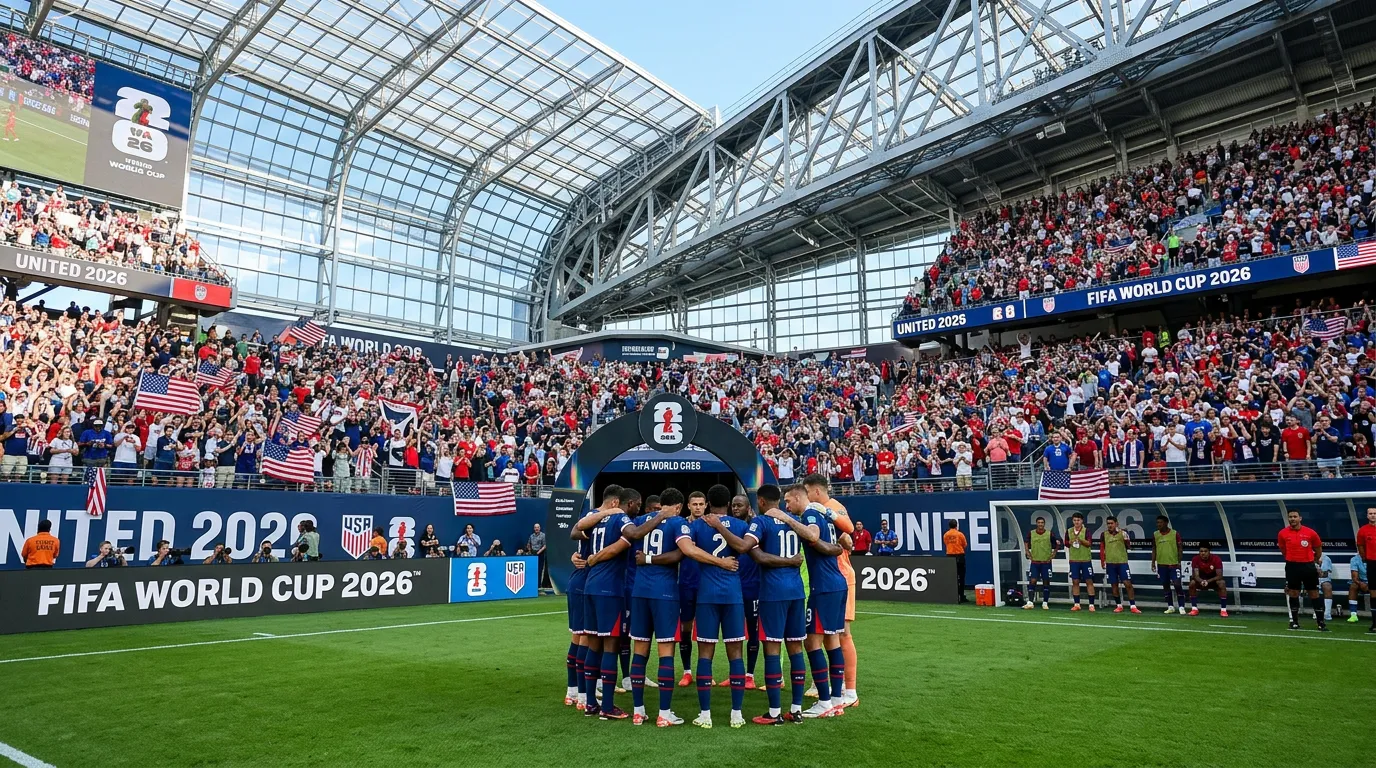
The last time the United States hosted a World Cup, in 1994, the country was still figuring out whether it cared about soccer. Thirty-two years later, the answer is unambiguous: American soccer has arrived, and the infrastructure — from MLS’s explosive growth to the European pipeline producing players at clubs like AC Milan, Chelsea, and Juventus — has transformed the USMNT from a plucky underdog into a team with genuine ambitions of reaching the quarterfinals or beyond. The usa world cup 2026 campaign begins at SoFi Stadium in Los Angeles on June 12, when the home side takes on Paraguay in front of a crowd that will make the most hostile European atmospheres feel intimate by comparison. Eleven stadiums across the country will host USA matches and other fixtures throughout the tournament, and the combination of home advantage, infrastructure, and a squad that blends European experience with MLS intensity makes this the most significant moment in American soccer history.
I spend roughly half my working hours analyzing North American soccer markets, and the USMNT presents a fascinating case study. On talent alone, this squad belongs in the 12-to-16 range globally — good enough to advance from most groups, competitive in the Round of 32, but facing an uphill battle against the established European and South American powers in the quarterfinals. With home advantage factored in, that range shifts to roughly 8-to-12, which is where the betting markets currently place them. The question for bettors is whether the home crowd, the favourable time zones, the familiar stadiums, and the emotional energy of hosting produce a performance bump large enough to push the USA into genuine contention — or whether the talent gap against France, Spain, and Argentina is simply too wide to bridge. My assessment sits somewhere in between: the USA will exceed their global ranking in 2026, but the ceiling remains the quarterfinals unless the bracket cooperates significantly.
Automatic Qualification as Co-Hosts
Like Canada and Mexico, the USA qualified automatically as co-hosts, bypassing the CONCACAF qualifying process that produced such drama and controversy during the 2022 cycle. The memories of that qualification campaign — the 2-0 loss to Costa Rica on the final matchday of the Octagonal that nearly cost the USA their spot, the tension of watching results from other venues while sitting in a San Jose dressing room — remain fresh in American soccer culture. Skipping that process in 2026 removes a source of stress but also eliminates the competitive edge that qualifying provides.
The coaching staff used the 2024-2025 international windows to schedule friendlies against European and South American opposition of varying quality. The results were mixed — a 2-1 win over Germany in September 2024 was followed by a 3-0 loss to Argentina in November, and a run of three consecutive draws against Denmark, Belgium, and Japan in the spring of 2025 suggested a team still searching for its optimal lineup and tactical approach. The Copa America in 2024 provided competitive minutes but ended in group-stage elimination, a result that intensified the debate about whether the USMNT’s European-based players were being effectively integrated into the national team framework.
The positive aspect of automatic qualification is roster experimentation. The coaching staff has tested multiple formations — a 4-3-3 that mirrors the European club setups most players are accustomed to, a 3-5-2 that provides defensive security and wing-back width, and a more aggressive 4-2-3-1 that positions Christian Pulisic as the central creative force. By the time June arrives, the expectation is that the coaching staff will have settled on a primary system, with the tactical flexibility to adjust based on the opponent. That flexibility, rather than a single dominant system, may prove to be the USA’s greatest tactical asset in a tournament where group-stage opponents (Paraguay, Australia, Turkey) present very different challenges.
The comparison with Canada’s preparation is instructive for the Canadian audience. Both host nations bypassed qualifying, both used friendlies to test younger players, and both face the same question about competitive sharpness heading into the tournament. The key difference is squad profile: Canada’s European-based contingent is concentrated at a smaller number of elite clubs (Davies at Bayern, David at Juventus), while the USA’s is spread more broadly across mid-tier European clubs and MLS. That distribution gives the USA more options but less certainty about who the best eleven are — a trade-off that Marsch, across the border, has avoided by building his system around a clearer hierarchy of starting players.
Key Players — Pulisic, McKennie & the MLS Connection
Christian Pulisic is the player everything flows through. At AC Milan, he has evolved from a wide player into a versatile attacker who operates across the front line with equal effectiveness — cutting inside from the right, driving through the centre as a number ten, or stretching defences with runs in behind from the left. His technical ability on the ball, his willingness to take on defenders one-on-one, and his shooting accuracy from distance make him the most complete American footballer ever produced. At 27, Pulisic enters the home World Cup at peak physical maturity, and his Champions League experience with Milan (and previously Chelsea and Borussia Dortmund) provides the big-game pedigree that younger teammates lack.
Weston McKennie brings the engine that Pulisic’s creativity needs to function. His box-to-box energy — covering ground defensively, arriving late in the opposition box for headed goals, pressing relentlessly in midfield — gives the USMNT a physical dimension that compensates for some of the technical gap against European opposition. At Juventus, McKennie has earned consistent minutes in a Serie A squad that demands tactical discipline, and his ability to perform in high-pressure Italian league matches translates directly to the World Cup environment. Tyler Adams, the midfield anchor, provides the defensive screening that allows McKennie and Pulisic freedom to attack. His Reading of the game — anticipating passing lanes, positioning himself to intercept — is the unglamorous skill that holds the entire midfield structure together.
The MLS connection is relevant for the Canadian audience specifically. Several USMNT regulars play in MLS — including goalkeeper Matt Turner, who has established himself between the posts, and a rotating cast of midfielders and defenders who provide depth beyond the European-based starters. The familiarity of these players to Canadian soccer fans — through CPL partnerships, cross-border rivalries between Toronto FC and American clubs, and the shared broadcasting ecosystem — gives the USA a narrative proximity to Canadian audiences that European sides lack. Gio Reyna, the creative midfielder who has battled injuries throughout his career, represents the wild card: when fit, his passing vision and dribbling ability add a dimension that nobody in the USMNT squad can replicate. When injured, his absence leaves a gap in creativity that other players struggle to fill.
The defensive line has been the USMNT’s most debated area heading into the tournament. Chris Richards, the centre-back who has established himself in the Bundesliga, provides the ball-playing ability from the back that modern systems demand. Sergiho Dest’s return from injury adds a right-back option with attacking instincts that suit the 4-3-3 formation. Tim Ream, the veteran who defied age expectations by performing at a high level in the Premier League into his late thirties, may earn a farewell tournament spot for his leadership qualities and composure under pressure. The overall defensive quality is adequate for the group stage — where the opposition’s attacking threat is manageable — but represents the area most likely to be exposed in the knockout rounds against teams with world-class forwards. If the USA concede first in a quarterfinal, the defensive structure’s ability to hold under sustained attacking pressure from a team like France or Brazil becomes the critical question, and I am not confident the answer is positive.
Folarin Balogun, the striker who committed his international future to the USA after representing England at youth level, provides the focal point in attack. His goalscoring record in Ligue 1 with Monaco — over 20 goals across the last two seasons — demonstrates the clinical finishing that the USMNT historically lacked from the centre-forward position. Balogun’s link-up play with Pulisic, where the striker drops short to receive passes and then spins to play through-balls into the channels, has become the USA’s most productive attacking combination in recent matches. At 25, Balogun enters his first World Cup as the primary scoring threat, and his ability to deliver in the tournament’s high-pressure environment will significantly influence how far the USA advance.
Group D — Paraguay, Australia & Turkey
The USA received a draw that sits between favourable and challenging. Paraguay are beatable but disciplined; Australia bring physical intensity and a never-say-die mentality that has produced upset results at previous World Cups; and Turkey — the final addition after their UEFA playoff victory over Kosovo — are the most talented and dangerous of the three opponents. No single match in Group D should be considered a foregone conclusion, and the USA will need to earn every point through competitive, organized performances.
Turkey are the team I expect to give the USA the most trouble. Under their current coaching setup, Turkey have developed an aggressive pressing system that combines technical quality with physical commitment. Their squad includes Hakan Calhanoglu, one of the best midfielders in Serie A, along with younger players from the Bundesliga and Premier League who provide depth across all positions. Turkey’s qualification through the playoff pathway — beating Kosovo 1-0 in a tense final — demonstrated the resilience needed for tournament football, and their large diaspora community in the northeastern United States will create an atmosphere at the USA-Turkey match that could feel like a home game for the visitors.
Australia present a different challenge: direct, physical, and relentless in their pressing. The Socceroos have developed a culture of exceeding expectations at World Cups — reaching the Round of 16 in 2022 after beating Denmark and Tunisia — and their Premier League-based players provide the individual quality to compete at this level. Australia’s set-piece quality and aerial presence from corners make them dangerous opponents who can snatch a result against more technically gifted teams. Paraguay, South American qualifiers with the tactical discipline and defensive organization that CONMEBOL produces, are the opponents the USA should beat most comfortably but cannot take lightly. Paraguay’s defensive record in qualifying — the second-fewest goals conceded in the CONMEBOL table — suggests they will not be easy to break down even on the USA’s home turf. Their physical, combative midfield and experienced defensive line are precisely the qualities that neutralize the technical advantages the USA possess through players like Pulisic and Reyna. If the USA fail to break down Paraguay’s defensive block in the first half, the frustration that builds in a home stadium — where the crowd’s expectations amplify every misplaced pass — can become a burden rather than an advantage.
USA’s Betting Odds — Can They Reach the Quarters?
The USA are priced at approximately 26.00 to win the 2026 World Cup outright, which implies roughly a 3.8% probability. That places them below the top tier of contenders but ahead of most mid-tier teams, reflecting the home advantage premium the market assigns. To win Group D, the USA sit at approximately 1.80 — a price that accounts for Turkey’s quality and the competitiveness of the group overall. To advance from the group, the odds are around 1.20, reflecting the near-certainty of at least a third-place finish in a four-team group under the expanded format.
The market I find most interesting is the USA to reach the quarterfinals at approximately 2.50. This requires winning the group (or finishing second or third) and then winning one or two knockout matches. With home advantage pushing the probability of each knockout match in the USA’s favour by approximately 10-15%, the 2.50 price implies around 40% probability, which I consider slightly conservative. My model puts the quarterfinal probability at closer to 45-48%, which means the 2.50 offers marginal value.
Pulisic’s Golden Boot odds at approximately 41.00 represent a speculative play with limited expected value unless the USA reach the semifinals. His scoring rate for the national team — roughly one goal every three matches — would need to improve significantly in a tournament setting for him to challenge the likes of Mbappé, Kane, and Vinícius Jr. The more realistic player bet is Pulisic to score in the tournament at 1.50, which captures his involvement in the USA’s attacking play without requiring an unrealistic volume of goals.
The Home Crowd Factor — 11 Stadiums, One Mission
Home advantage at World Cups is real, measurable, and historically significant. South Korea reached the semifinals in 2002. Russia topped their group and reached the quarterfinals in 2018. Brazil reached the semifinals in 2014 (before the Germany disaster). The data suggests host nations outperform their pre-tournament ratings by approximately 0.3 to 0.5 goals per game — a substantial boost that translates into additional wins across a multi-match tournament.
The USA’s home advantage in 2026 is amplified by the number of stadiums available. With 11 American venues hosting matches, the logistics of fan travel, team accommodation, and acclimatization all favour the home side. The USMNT can train at familiar facilities, sleep in familiar hotels, and play on pitches they have used dozens of times in MLS and international friendly matches. The crowd sizes — SoFi Stadium holds over 70,000, AT&T Stadium in Dallas over 80,000 — dwarf most international football venues, and the noise levels at American sporting events create an atmosphere that opponents from smaller footballing nations will find overwhelming.
The cross-border dynamic adds another layer. Canadian fans attending matches in nearby US cities — Detroit, Seattle, and Philadelphia are all within driving distance of major Canadian population centres — will add to the North American atmosphere that distinguishes this World Cup from previous editions. The shared enthusiasm between Canadian and American soccer cultures, built through MLS rivalries and the joint hosting arrangement, creates a continental energy that benefits both host nations when they play in front of these crowds.
For Canadian bettors specifically, the USA’s home advantage creates interesting hedging opportunities. If you are backing Canada to advance deep into the tournament, a smaller bet on the USA to reach the quarterfinals provides a hedge against the scenario where Canada exits early but the North American narrative remains alive through the American side. The correlation between Canadian and American tournament performance — both benefiting from home advantage, both playing in front of passionate crowds — means that backing both host nations in different markets can produce positive returns across a range of tournament outcomes.
Our Prediction for the USA
The USA finish second in Group D behind Turkey, beating Paraguay and Australia while losing narrowly to Turkey in the group’s marquee match. The Round of 32 produces a competitive 2-1 win against a third-place qualifier, and the Round of 16 pits the USA against a strong opponent from Group C or another tough group — potentially Morocco or Scotland. I see the USA reaching the quarterfinals, where they face a top-tier European side (France, Spain, or England) and exit in a match that is competitive for 70 minutes before the quality gap becomes decisive in the final stages.
A quarterfinal exit is a strong result by American standards and would represent the USMNT’s best World Cup performance since 2002, when they reached the same stage in Japan and South Korea. The home advantage, the squad depth, and Pulisic’s individual brilliance give the USA the tools to reach that level. Going further — a semifinal or beyond — would require either a favourable bracket, a career-defining performance from Pulisic across multiple knockout matches, or both. The 26.00 outright is not a bet I am taking, but the USA to top Group D at 1.80 and the quarterfinal at 2.50 are both plays I would consider for a tournament portfolio.
The home World Cup is a once-in-a-generation opportunity for American soccer, and this squad — while not among the world’s elite — has enough quality and motivation to capitalize on it. The lasting impact of the 2026 tournament on American soccer culture will be determined not just by results but by the experience: the packed stadiums, the coast-to-coast coverage, the next generation of American kids who watch Pulisic and Balogun on the biggest stage and decide that soccer — not basketball, not football, not baseball — is the sport they want to play. Regardless of where the USA finish, the 2026 World Cup will accelerate American soccer’s growth trajectory by a decade, and for Canadian observers, that growth has direct implications for the shared North American soccer ecosystem that benefits both nations.
